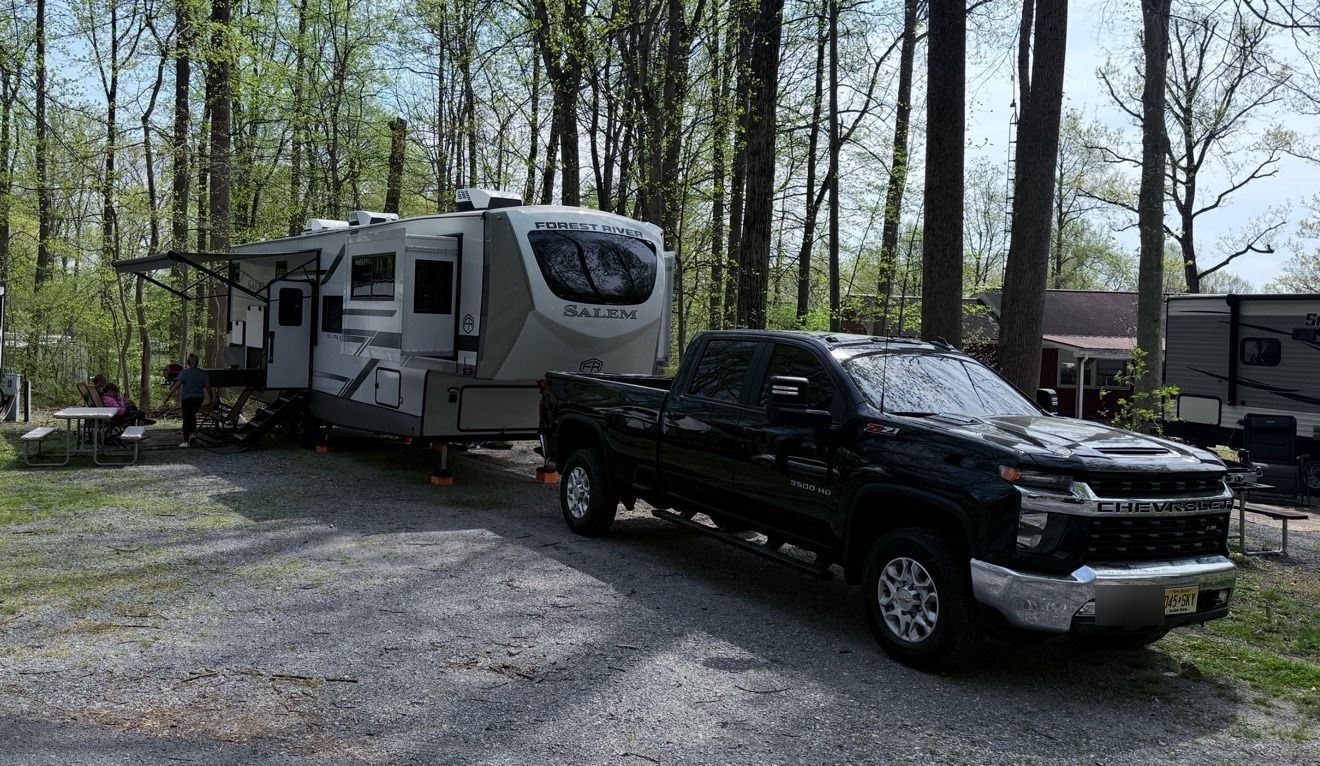
The Sticker Beats the Brochure: Fifth Wheel Payload Math
Weights, in plain words
Every truck and trailer wears two different sets of numbers. The brochure numbers are marketing: dry weights, empty weights, best-case weights, measured before options, before cargo, before people. The sticker numbers are law and physics: the payload and weight ratings printed on the stickers on your actual truck and your actual trailer. When the two disagree, the sticker wins. Every time.
The five numbers that matter
- Payload (truck sticker, driver's door): everything the truck can carry: people, gear, hitch, and the trailer's pin weight. This is the number big fifth wheels eat first.
- GVWR: the most the truck itself may weigh, loaded. Truck plus everything in and on it.
- GCWR: the most the truck and trailer may weigh together.
- Axle ratings: the most each axle may carry. The rear axle feels the pin.
- Pin weight (trailer): the share of the fifth wheel's weight that sits in the truck bed. Loaded fifth wheels commonly put roughly a fifth to a quarter of their weight on the pin. Brochures quote the empty pin weight. Yours will be heavier.
Do the math loaded, not empty
Take the trailer's loaded weight, the weight with water, propane, food, clothes, and everything your family actually travels with, and figure the pin from that. Then add the hitch itself, every passenger, and everything in the truck. If that total is over the door sticker's payload, the rig is overweight no matter what the brochure said, and no airbag or spring changes the sticker.
Our rig is a 44-foot fifth wheel behind a 1-ton diesel, and payload is still the number we watch first. A bigger truck buys room; it does not buy an exemption.
Weigh it, do not guess it
A truck scale weigh, truck alone and then hitched, costs a few dollars and ends every argument. Weigh with the tanks and gear the way you really travel. Then write the numbers down where you will see them every trip, the same way we keep our cost ledger.
Related: what diesel towing costs per mile, including the tolls that price you by the axle.